
KnitKnot intelligence
Field notes.
What AI tells buyers about a company, where those claims come from, and how a team can correct the record.
Work through a claim
 Featured evidence plate
 Oct 07, 2026 · 3 min read
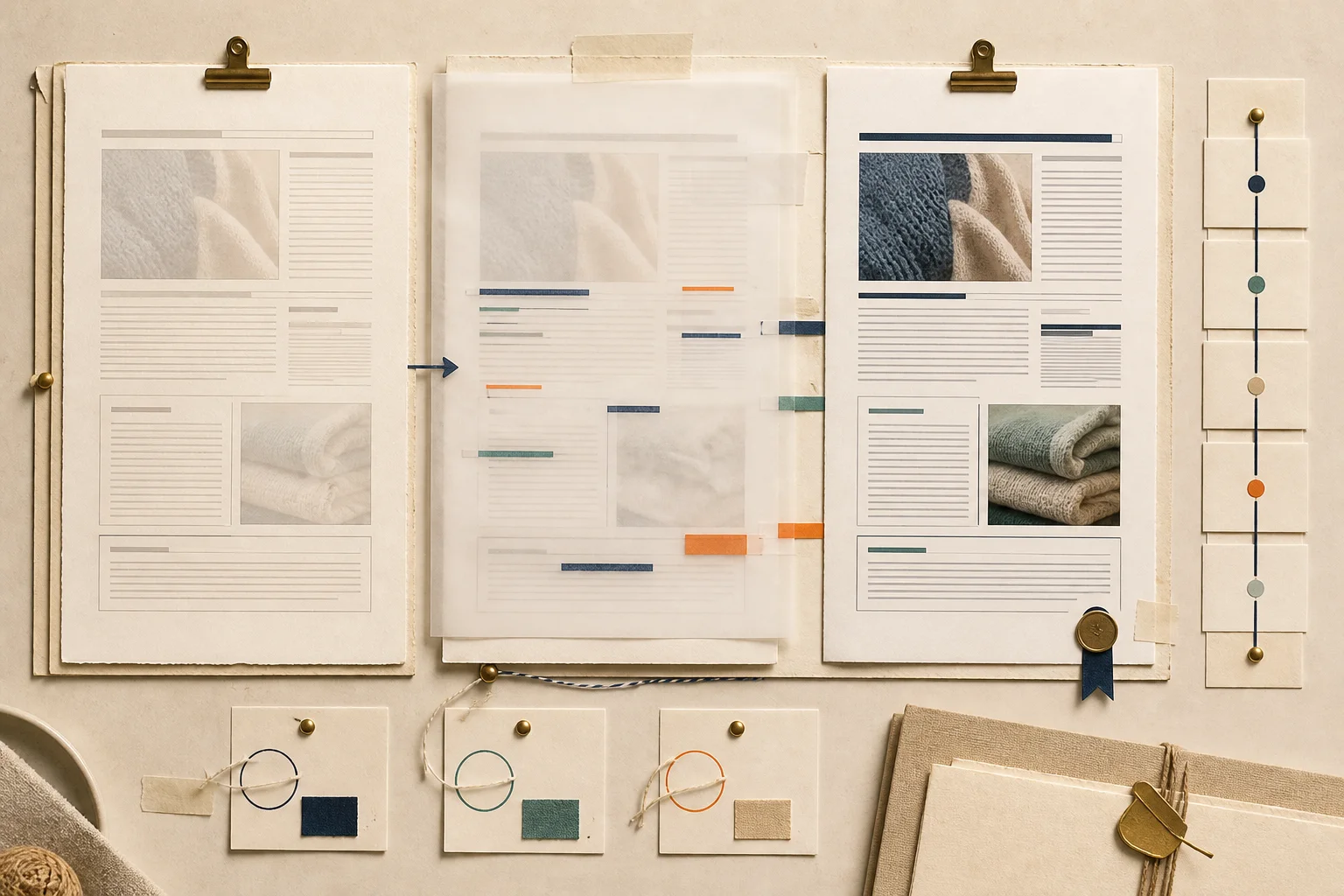
Introducing Evidence Packets for disputed AI claims
A bad AI answer is easy to screenshot. Evidence Packets preserve the answer, the outside and company pages used to verify a false claim, and when each was collected.
The archive
24 notes Plate 02research
Oct 07, 2026 · 4 min
In 74% of losing AI comparisons, the company's site wasn't cited
We examined 1,426 head-to-head losses in B2B software answers. Most had no citation from the losing company's site. Here is what that reveals about the evidence a buyer sees.
- Plate 03methodology
Sep 24, 2026 · 5 min
The citation that belonged to the next paragraph
Our pipeline credited sentences about KnitKnot to competitor websites. The cause was a number we had read as a text position when it meant something else. We now read the citation marks the answer shows, and leave a claim unsourced when those marks are missing.
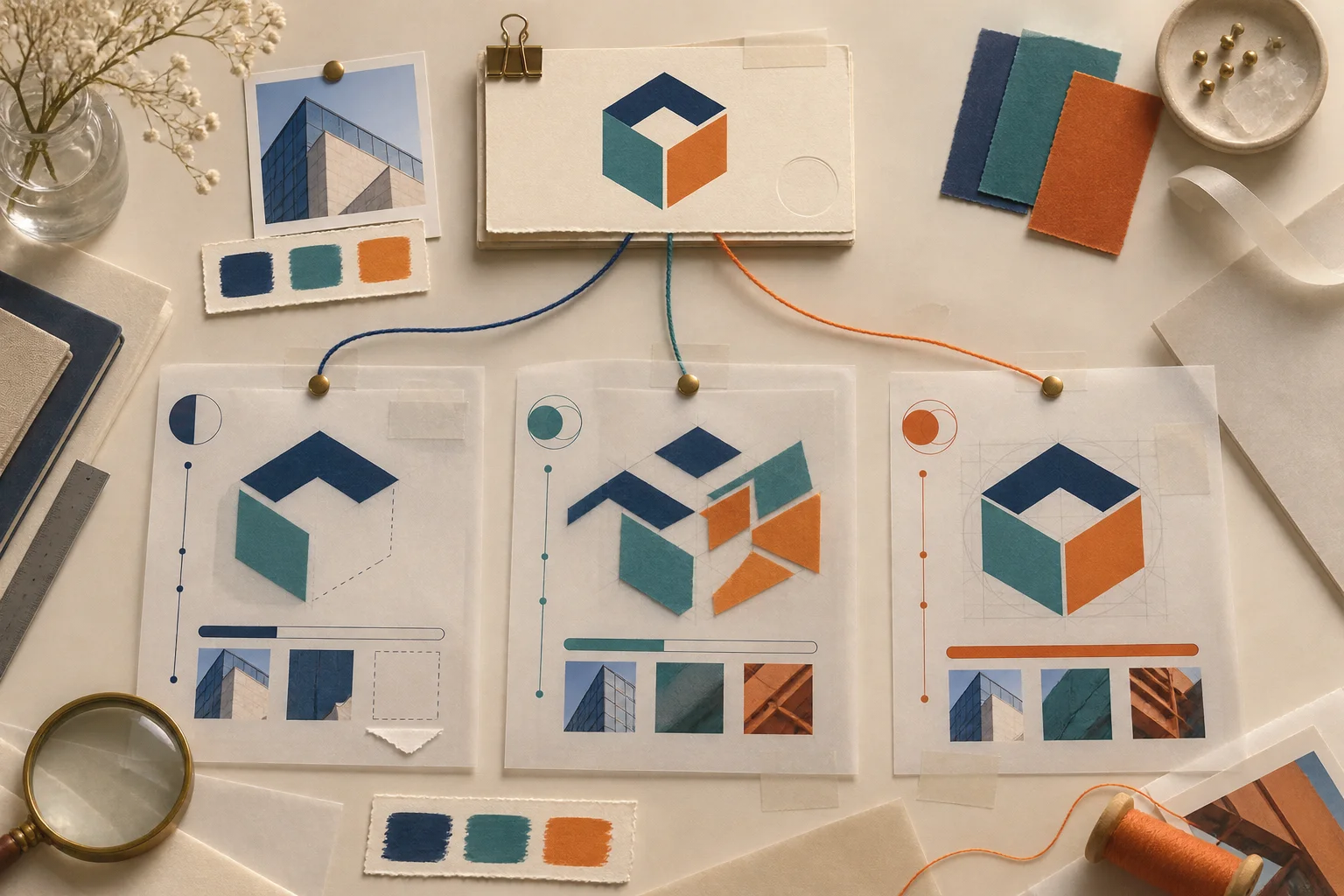 Plate 04methodology
Sep 24, 2026 · 5 min
We ranked a customer first when it was tenth
A dashboard rail told one customer it led its field in AI answers. The honest rank was tenth, and the gap came from measuring the customer and its competitors with two different signals. Two months later we found the same mistake in a chart.
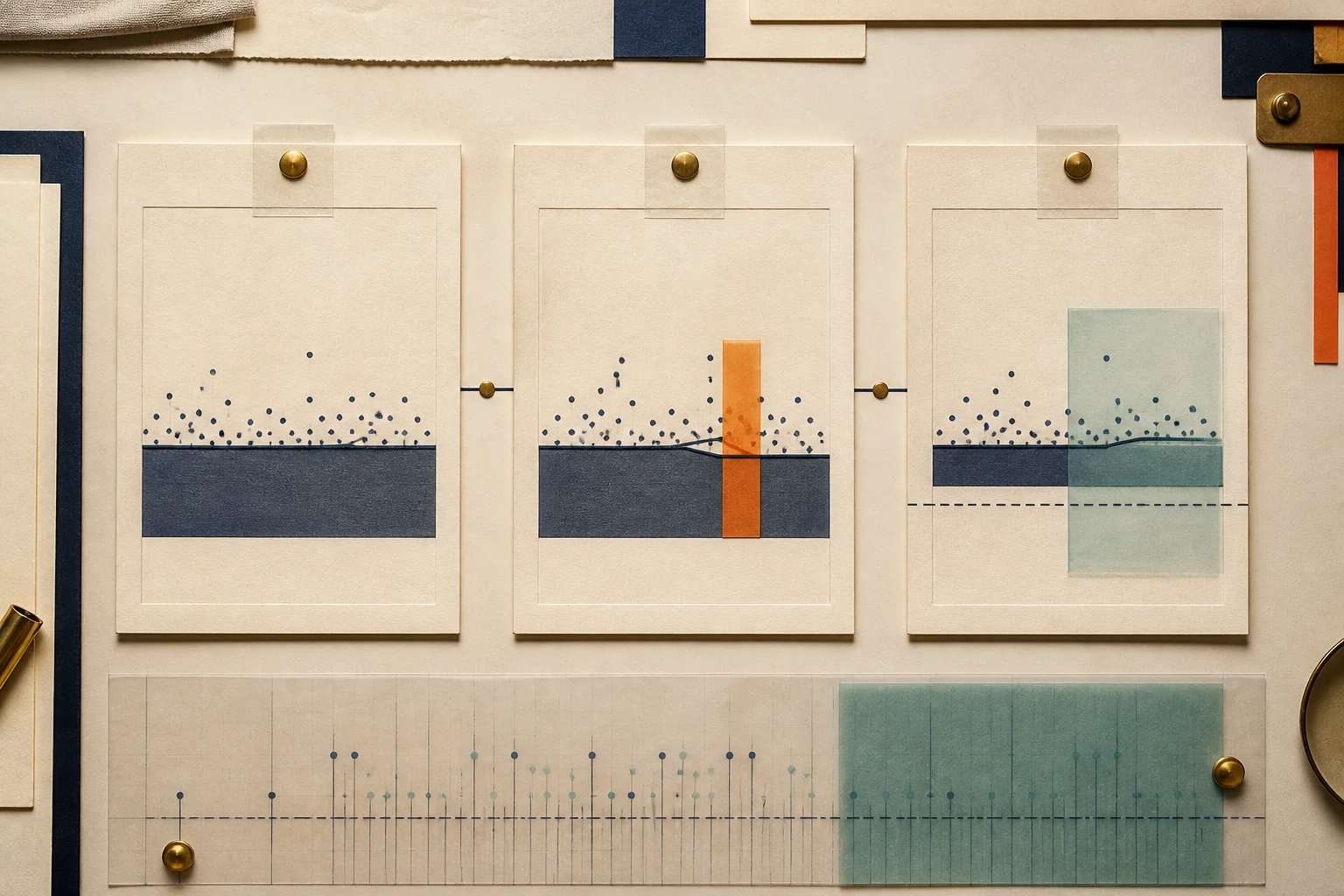 Plate 05methodology
Sep 24, 2026 · 5 min
When a real launch looks like a template date
A customer published six pages on one day in September and our ship detector credited none of them. The guard that threw them out existed for a good reason. Fixing it meant finding a signal that separates a real batch publish from a CMS date stamp, and refusing the cases it can't separate.
- Plate 06research
Sep 22, 2026 · 4 min
We tested Jev on 400 feature decisions
Jev cut the cost and time of one scoring step. Its first version also credited features to the wrong product, so we held it and revised the decision rule.
- Plate 07content-strategy
Aug 31, 2026 · 6 min
The pages buyers expect before they ask
A content strategy can be full of good pages and still leave out the comparison, alternatives, and category pages buyers look for when they are ready to choose.
 Plate 08AI presence
Aug 14, 2026 · 5 min
Why AI recommends only 4-7 vendors in your category
Google returns 10 results. AI usually returns 4-7 names. There's no page two. If you're not in the set, you're not in the evaluation.
- Plate 09sources
Aug 03, 2026 · 16 min
Most of your citations do nothing
The average AI answer cites 11.6 sources. Across 76,301 measured claims, fewer than 3 of them actually carry anything the buyer reads. We score every owned page on what its citations earn and trace every false or damaging claim back to the page that supplied it.
- Plate 10reports
Jul 31, 2026 · 4 min
How to check an AI visibility report before you act on it
A report may say AI is getting your company wrong. Before you assign work from it, check whether the cited answer, source, counts, and proposed fix support the claim.
- Plate 11sources
Jul 25, 2026 · 8 min
AI is citing pages that don't exist
We probed every URL that ChatGPT, Claude, Perplexity, and Gemini cited across nearly 10,000 buyer-question answers. One citation in eighteen points at a URL that was unavailable when checked, and nearly a third of answers lean on at least one.
- Plate 12claim intelligence
Jul 15, 2026 · 3 min
How should you measure the cost of AI misinformation?
A wrong product claim can affect a buying decision. Measuring that risk requires separating captured errors, buyer evidence, and hypothetical revenue.
- Plate 13AI presence
Jun 18, 2026 · 6 min
The 10 questions AI buyers ask that your website can't answer
We generate benchmark prompts grounded in real Google search data, with search volume attached to each one. The questions buyers ask ChatGPT, Claude, Perplexity, and Gemini are more adversarial, more specific, and more comparative than anything your website was designed to handle. Here are the ten patterns that show up most.
- Plate 14research
Jun 12, 2026 · 8 min
Why AI recommends your competitor instead of you
We analyzed 33,000 AI evaluations across four models. The most surprising finding: models disagree with each other on who to recommend 48.6% of the time. Which model the buyer opens matters more than most companies realize.
- Plate 15benchmarks
Jun 10, 2026 · 8 min
What ChatGPT says when a buyer asks to compare you
We ran the same comparison prompt across ChatGPT, Claude, Perplexity, and Gemini for a B2B company. Four models gave four different answers. Two got the pricing wrong. One recommended the competitor based entirely on the competitor's own blog post.
- Plate 16sources
Jun 06, 2026 · 3 min
Not all citations are equal
A source linked to the recommendation deserves a different review from a background reference. Neither citation proves that the publisher controlled the answer.
- Plate 17claim intelligence
Jun 03, 2026 · 3 min
Why does AI get facts about your company wrong?
An incorrect AI answer can involve stale information, a missing condition, or a source that never supported the claim. Each needs a different investigation.
- Plate 18methodology
May 28, 2026 · 7 min
A prospect told us our benchmark was rigged
We designed adversarial prompts to show companies where AI was misrepresenting them. Prospects kept getting defensive about the prompts themselves. So we rebuilt the whole thing around real buyer behavior.
- Plate 19benchmarks
May 21, 2026 · 5 min
Prompt libraries are coverage optimization problems
A bigger prompt library doesn't mean a better benchmark. We had hundreds of prompts and still missed the buyer situations that mattered most.
- Plate 20methodology
May 14, 2026 · 5 min
Approximating the Claude Engine
ChatGPT, Perplexity, and Gemini all have incognito search. Claude doesn't. To benchmark how Claude represents companies, we had to find a way that respects Anthropic's terms instead of working around them. Here's what we built.
- Plate 21measurement
May 07, 2026 · 6 min
Confident lies are worse than hedged ones
Accuracy and conviction are independent axes. Most AI benchmarks only measure the first one. We model the interaction between what AI knows and how sure it sounds.
- Plate 22product
Apr 29, 2026 · 4 min
What a candidate asks AI about your company
A senior leader at a mid-size company asked us to track how AI describes them to candidates weighing offers. It wasn't our use case. With barely any changes, it worked.
- Plate 23scoring
Apr 22, 2026 · 8 min
We stopped asking AI who wins
Most LLM-as-judge systems ask one question: who's better? We decompose into structured signals and derive the outcome deterministically. Here's why.
- Plate 24product
Apr 14, 2026 · 6 min
Introducing KnitKnot
KnitKnot runs the questions software buyers ask across four AI engines, saves every answer, checks the claims, and turns repeated problems into work a company can ship.
- Plate 25launch
Apr 07, 2026 · 7 min
Why we pivoted KnitKnot
We started KnitKnot as a digital sales room. Buyers liked it, but nobody needed it. Then we began asking what a sales room should look like when the buyer is an AI agent.