
KnitKnot

# In 74% of losing AI comparisons, the company's site wasn't cited

We examined 1,426 head-to-head losses in B2B software answers. Most had no citation from the losing company's site. Here is what that reveals about the evidence a buyer sees.


## The losing company's page was usually absent

We looked at 1,426 head-to-head AI answers in which the company being evaluated lost. In 1,056 of them, or **74.1%**, the citation list contained no page from the losing company's own domain.

Suppose a buyer asks an AI assistant to compare your product with a competitor. The answer says your competitor has a capability you lack and links to the competitor's comparison page. You would want to know whether the page actually supports that claim, whether your own documentation says otherwise, and whether the assistant considered it. The citation list alone often gives you no first-party page to inspect.

That absence does not prove the assistant never encountered the company's content: a model may have prior knowledge or use material it does not cite. Nor does a citation from the company's site prove the answer interpreted that page correctly. It tells us what evidence was visible to the buyer in the captured answer.

## How much of the citation list belongs to competitors?

In a separate August 2026 snapshot of our B2B software benchmarks, **28.2% of roughly 368,000 citation records** pointed to competitor-owned domains. We matched cited domains against the competitors tracked in each company's benchmark.

That number is large enough to make source ownership worth inspecting. It is not a measure of how often competitors mislead AI, and it does not mean competitors supplied 28.2% of claims about the company being evaluated. A comparison prompt names both companies. An assistant can cite a competitor's product page for an entirely fair description of that competitor.

The practical problem is that a team reading the answer has no first-party page to inspect in most of these losses. If the answer makes a questionable product claim, the team has to trace the claim, check the available evidence, and find out whether its own published facts were missing, unclear, or simply not cited.

## The number we do not have yet

The headline we would *like* to measure is: when an AI answer makes a claim **about you**, how often is the source tied to that claim your own page, a competitor-owned page, or an independent page?

The aggregate citation count cannot answer it. The other 71.8% of citations includes the evaluated company's pages as well as independent sources; calling all of it “third party” would be wrong. And a citation at the end of an answer is not necessarily evidence for the sentence beside it.

Our claim extraction found a deterministic source link for about 44% of claims in this snapshot. For the rest, we cannot reliably assign an individual claim to a cited page. Any claim-level ownership percentage that quietly drops those unattributed claims would look more certain than the evidence allows.

The next cut needs four buckets: the company's own sources, competitor-owned sources, independent sources, and claims with no reliable source match. It also needs to distinguish a claim *about the competitor* from a claim *about the company being evaluated*. We will report that split when we can make it without guessing.

## What to check in your own answers

Pick a comparison question a buyer actually asks. Run it across the AI products your buyers use. For each answer, keep the exact wording, date, citations, and recommendation. Then ask three questions:

  1. 1. Which claims about **your** product could change the buyer's decision?
  2. 2. Which cited page, if any, can be tied to each claim, and does that page support it?
  3. 3. Is your own current explanation of the disputed point public, specific, and easy to find?

If a competitor page makes an inaccurate claim, preserve the page and answer before contacting anyone or publishing a response. If the competitor page is accurate and your own site is vague, the useful move is to improve your explanation. Our [guide to monitoring competitor claims](/learn/how-to-monitor-competitor-claims/) walks through that review. Either way, the unit of work is a claim and its evidence, not a domain-level citation count.

Our August snapshot covered 21 B2B software workspaces and four AI engines. The mix of companies and questions reflects our benchmarks, not every AI-assisted purchase. The percentages above describe observed answers and visible citations; they do not establish what caused a recommendation or whether any competitor acted improperly.

← Field notes
Published
Reading time
4 minutes
Filed under
research · sources · competitive claims

KnitKnot field note

In 74% of losing AI comparisons, the company's site wasn't cited

We examined 1,426 head-to-head losses in B2B software answers. Most had no citation from the losing company's site. Here is what that reveals about the evidence a buyer sees.

Kevin Kho

Co-founder, KnitKnot
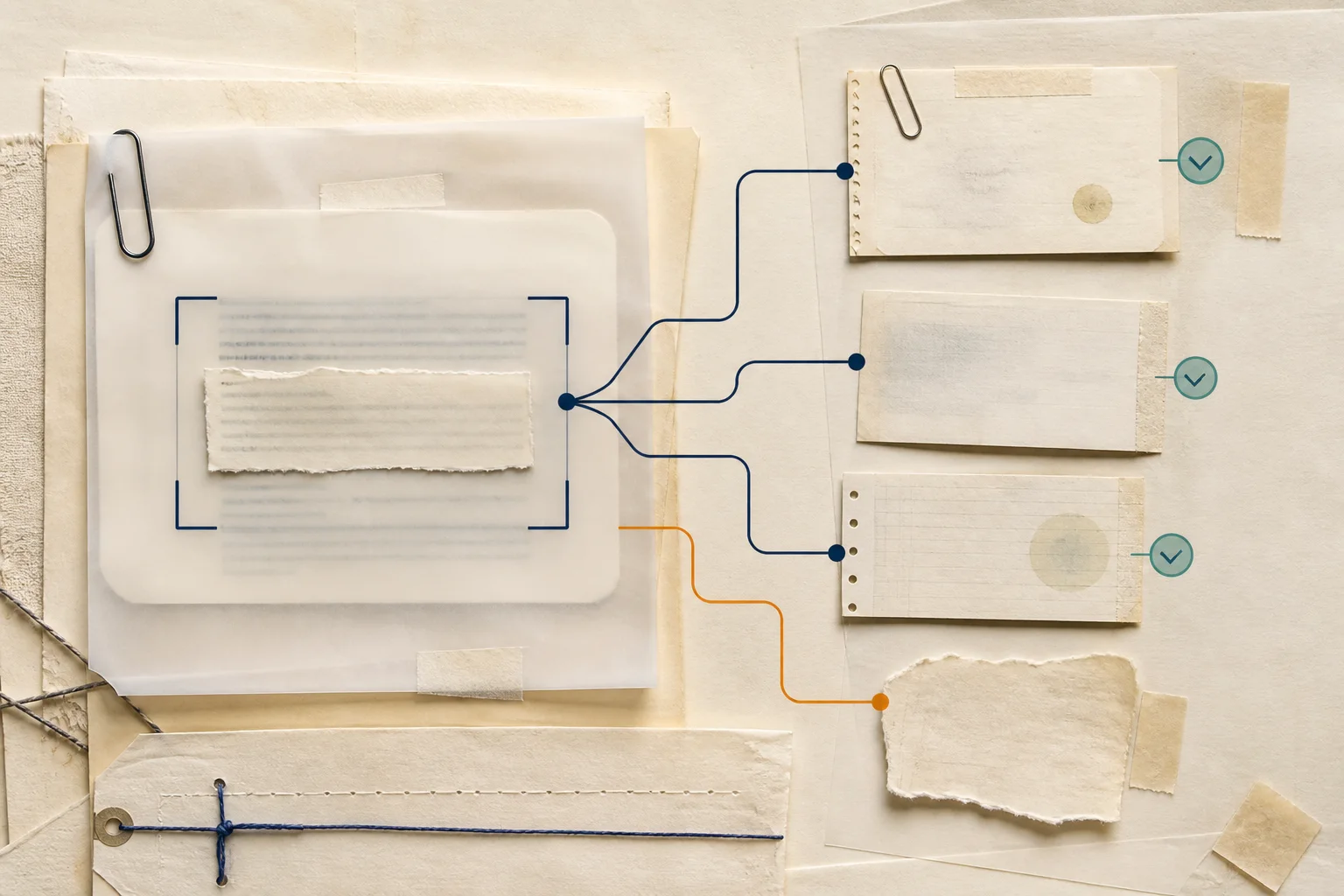
A source trail linking claim fragments to citations and evidence receiptsEvidence plate / researchObserved · sourced · reviewed

The losing company’s page was usually absent

We looked at 1,426 head-to-head AI answers in which the company being evaluated lost. In 1,056 of them, or 74.1%, the citation list contained no page from the losing company’s own domain.

Suppose a buyer asks an AI assistant to compare your product with a competitor. The answer says your competitor has a capability you lack and links to the competitor’s comparison page. You would want to know whether the page actually supports that claim, whether your own documentation says otherwise, and whether the assistant considered it. The citation list alone often gives you no first-party page to inspect.

That absence does not prove the assistant never encountered the company’s content: a model may have prior knowledge or use material it does not cite. Nor does a citation from the company’s site prove the answer interpreted that page correctly. It tells us what evidence was visible to the buyer in the captured answer.

How much of the citation list belongs to competitors?

In a separate August 2026 snapshot of our B2B software benchmarks, 28.2% of roughly 368,000 citation records pointed to competitor-owned domains. We matched cited domains against the competitors tracked in each company’s benchmark.

That number is large enough to make source ownership worth inspecting. It is not a measure of how often competitors mislead AI, and it does not mean competitors supplied 28.2% of claims about the company being evaluated. A comparison prompt names both companies. An assistant can cite a competitor’s product page for an entirely fair description of that competitor.

The practical problem is that a team reading the answer has no first-party page to inspect in most of these losses. If the answer makes a questionable product claim, the team has to trace the claim, check the available evidence, and find out whether its own published facts were missing, unclear, or simply not cited.

The number we do not have yet

The headline we would like to measure is: when an AI answer makes a claim about you, how often is the source tied to that claim your own page, a competitor-owned page, or an independent page?

The aggregate citation count cannot answer it. The other 71.8% of citations includes the evaluated company’s pages as well as independent sources; calling all of it “third party” would be wrong. And a citation at the end of an answer is not necessarily evidence for the sentence beside it.

Our claim extraction found a deterministic source link for about 44% of claims in this snapshot. For the rest, we cannot reliably assign an individual claim to a cited page. Any claim-level ownership percentage that quietly drops those unattributed claims would look more certain than the evidence allows.

The next cut needs four buckets: the company’s own sources, competitor-owned sources, independent sources, and claims with no reliable source match. It also needs to distinguish a claim about the competitor from a claim about the company being evaluated. We will report that split when we can make it without guessing.

What to check in your own answers

Pick a comparison question a buyer actually asks. Run it across the AI products your buyers use. For each answer, keep the exact wording, date, citations, and recommendation. Then ask three questions:

  1. Which claims about your product could change the buyer’s decision?
  2. Which cited page, if any, can be tied to each claim, and does that page support it?
  3. Is your own current explanation of the disputed point public, specific, and easy to find?

If a competitor page makes an inaccurate claim, preserve the page and answer before contacting anyone or publishing a response. If the competitor page is accurate and your own site is vague, the useful move is to improve your explanation. Our guide to monitoring competitor claims walks through that review. Either way, the unit of work is a claim and its evidence, not a domain-level citation count.

Our August snapshot covered 21 B2B software workspaces and four AI engines. The mix of companies and questions reflects our benchmarks, not every AI-assisted purchase. The percentages above describe observed answers and visible citations; they do not establish what caused a recommendation or whether any competitor acted improperly.

Check your own comparisons

Find out what AI says about your company.

Request a one-time scan of the claims, sources, and head-to-head answers a buyer might see.

Question → claim → source → response