How KnitKnot Closes the Loop

Kevin Kho
This is Part 2. If you haven't read Part 1, start here: The Broken Feedback Loop in Sales Orgs.
Content goes out, nothing comes back. The product marketing manager (PMM) doesn't know what landed. The account executive (AE) can't find the right content when they need it. The sales leader is managing pipeline with lagging indicators and rep anecdotes. Every new deal starts from zero. That's the loop we described in Part 1, and deal rooms haven't fixed it because they were never designed to. They're containers. They hold content for a single deal, and when that deal ends, whatever happened inside stays there.
Imagine If the Signal Came Back
Imagine if every time a buyer opened a case study and forwarded it to their CFO, that signal flowed back to the person who created it. The PMM sees their battle card showed up in 14 closed-won deals this quarter. The ROI calculator they spent weeks on? Skipped in every single one.
The AE sees what content actually moved similar deals forward, instead of guessing from a shared drive with 200 files and no context. They tailor an asset for their specific buyer in seconds, without going off-brand, without waiting two days for a PMM revision.
The sales leader sees which stakeholders have engaged, whether the economic buyer has even opened the proposal, which deals are quietly stalling, without asking in a pipeline review.
And all of that data compounds. The hundredth deal room your team builds is meaningfully better than the first, because the system learned from every deal before it.
That's what we built.
How KnitKnot Closes the Loop
We call it a Deal Kit. It's the buyer's single destination for everything in the deal: curated assets, a mutual action plan, AI chat for instant answers, and async messaging between calls.
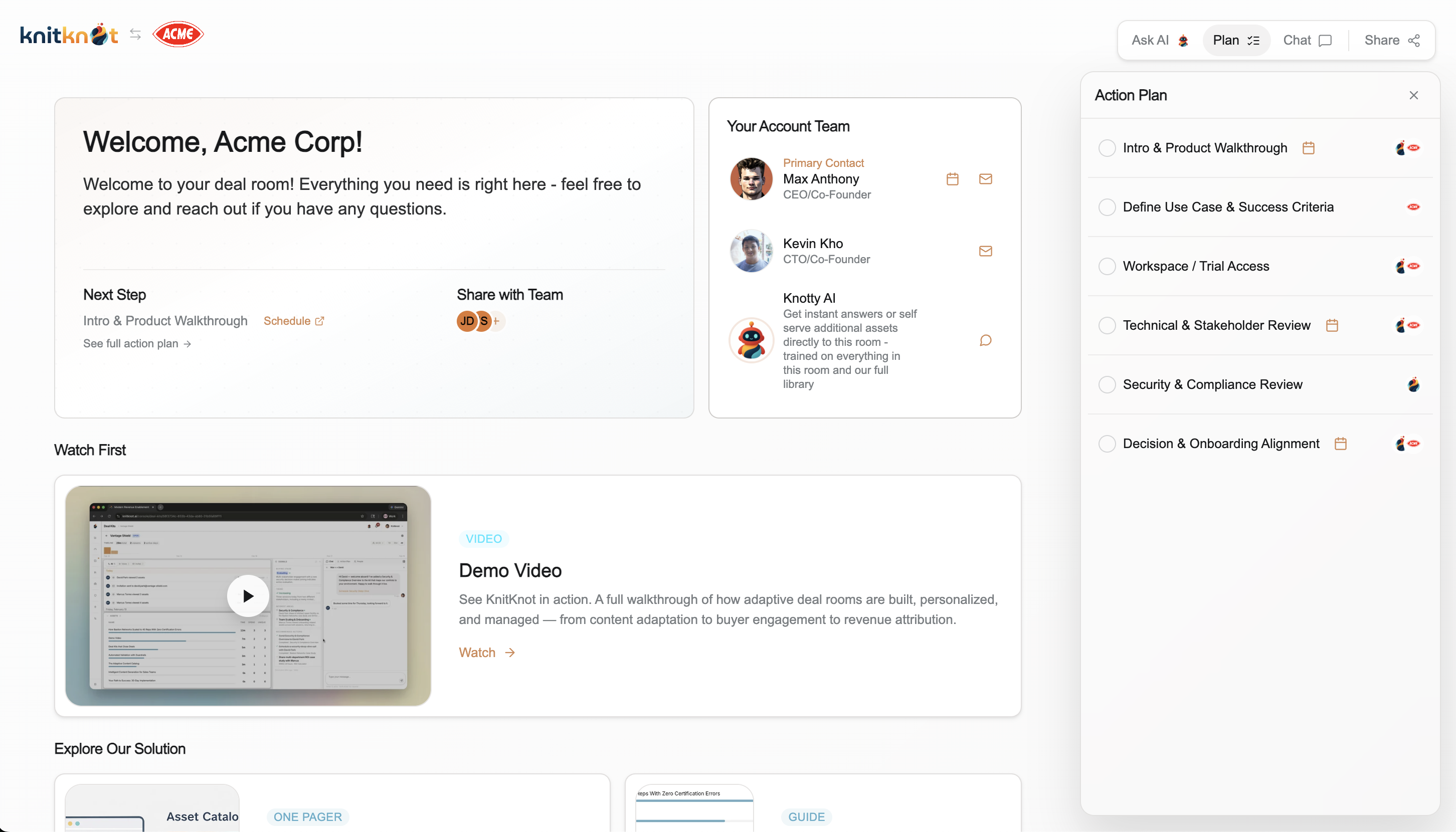
A PMM publishes a battle card to the content hub. From that point forward, it's versioned, tracked, and validated against brand rules. When an AE's deal reaches the right stage, KnitKnot surfaces it automatically based on the buyer profile and what's worked in similar deals before. The content finds the deal. Not the other way around.
But the asset is generic and the deal is financial services. The AE wants to tailor it for their prospect. They point KnitKnot to the customer profile in their CRM segment, it enriches the buyer context, and generates a tailored version. Brand Guard checks it against the PMM's rules before it goes live: voice, tone, terminology, competitive positioning, sensitive data. The AE self-serves without going off-brand. One source asset, infinite customer-ready variations. The original stays intact, and every adaptation traces back to it.
The buyer opens the Deal Kit without logging in. They read the battle card, forward it to their VP of Engineering, who comes back the next day and asks a question about integrations. They don't email the rep. They ask the AI assistant that sits inside every Deal Kit, grounded in the specific assets shared in that deal. It's designed to stay on-topic and reference only what's in the materials. The deal keeps moving at 11pm when the buyer is prepping their internal business case.
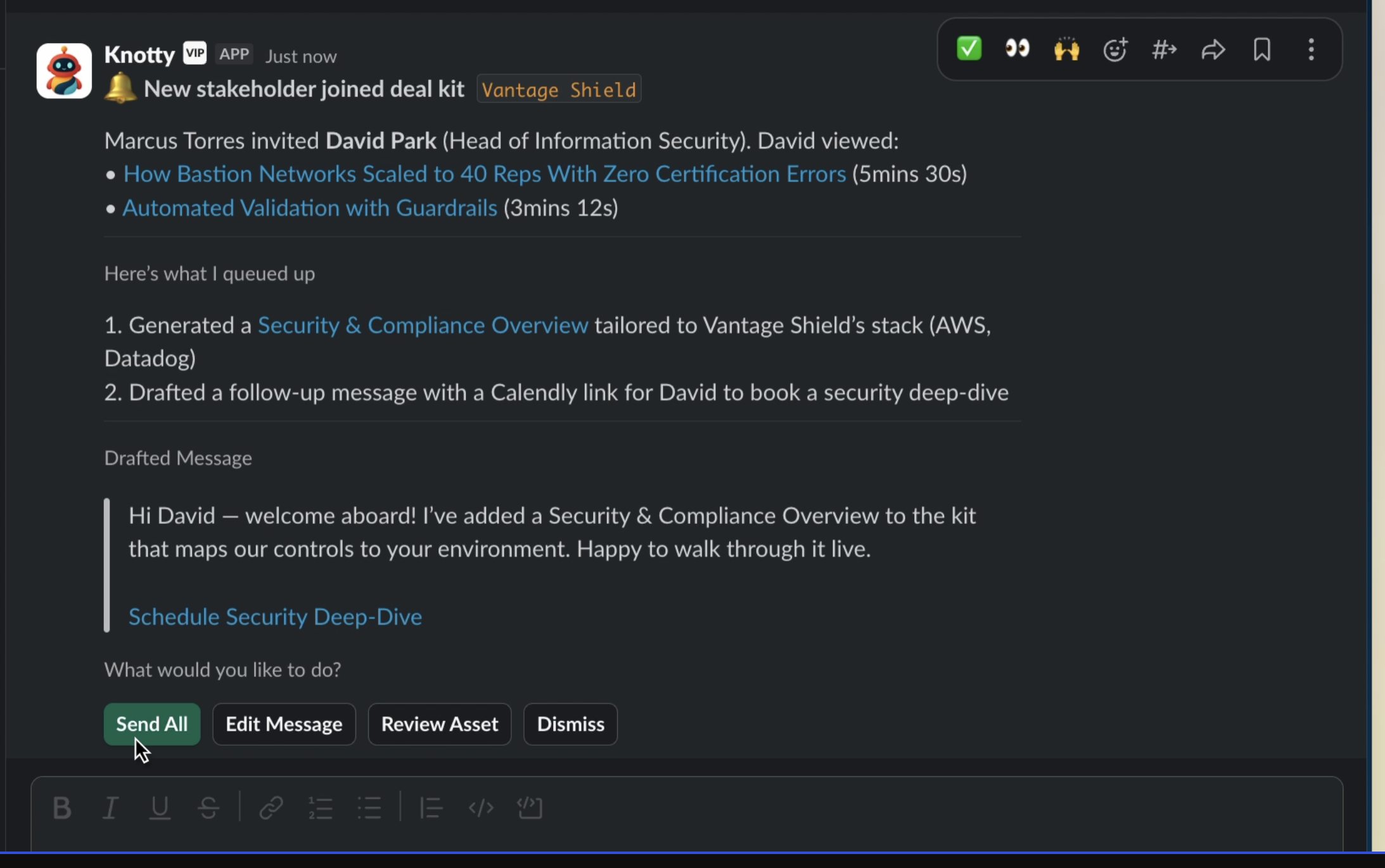
The sales leader sees all of this in real time. Not in a pipeline review next week. Right now. Who opened what, for how long, which stakeholders are engaged, which deals need attention. When a new stakeholder joins the deal and starts engaging, the rep gets a Slack nudge with what they viewed, a tailored asset queued up, and a drafted follow-up message ready to send.
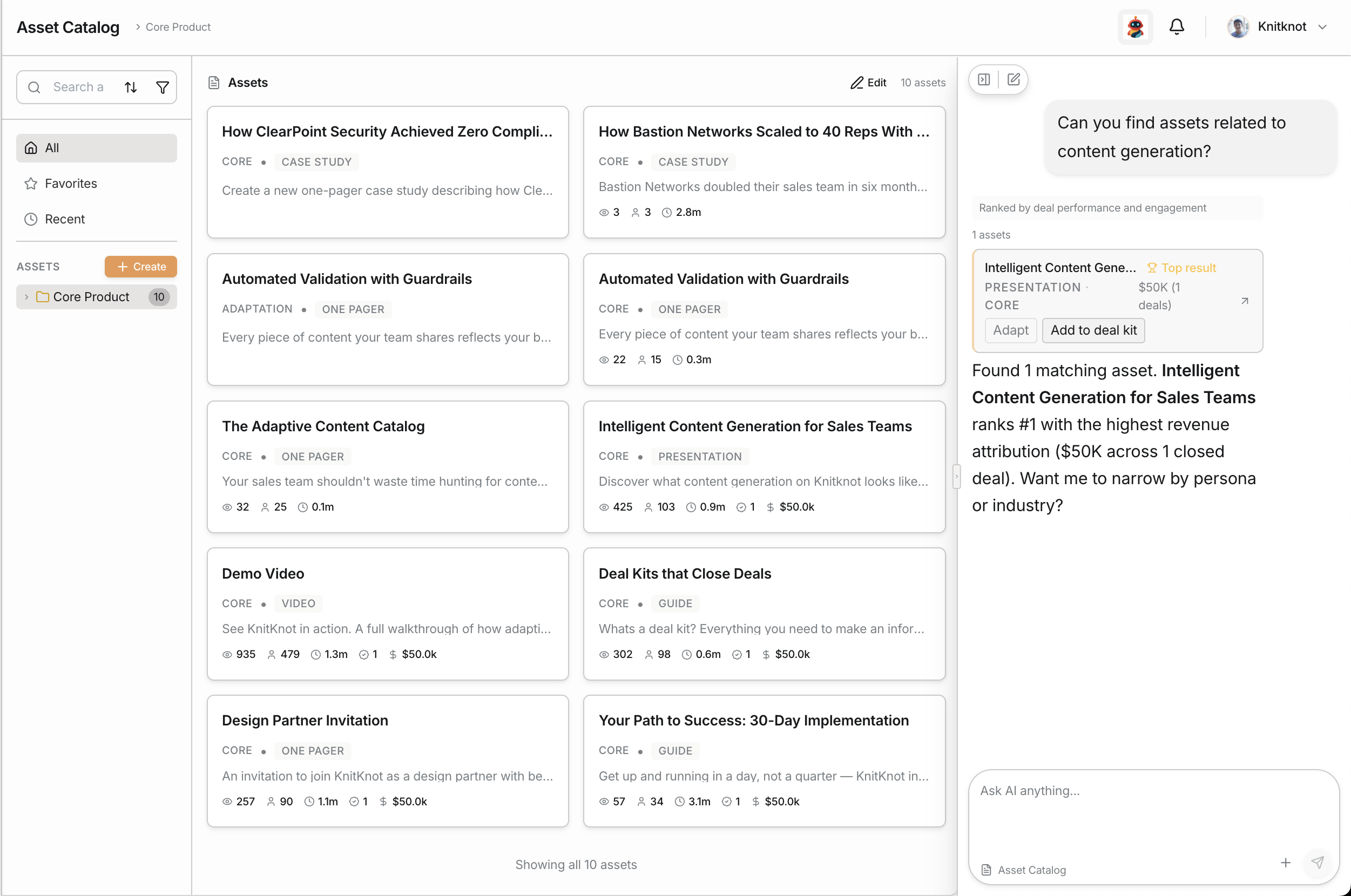
And the data flows back to the PMM. That battle card was in 23 deals this quarter. Buyers who engaged with it spent more time in the room overall. The ROI calculator is getting skipped. Time to rethink it. Every person in the chain finally gets what they were missing.
None of this requires the AE to manually build the room. KnitKnot knows your content library, your brand guidelines, your deal stages, and the engagement patterns from previous deals. When a new deal enters the pipeline, the Deal Kit assembles itself. A rep types /knitknot create deal kit for [prospect] in Slack, or a deal moves in the CRM, and the room exists. Setup took minutes before. Now it takes seconds. When every deal gets a room, the feedback loop covers the full pipeline, not just the top ten deals.
Every Deal Makes the Next One Better
Every deal that runs through KnitKnot makes the next one smarter. Content that performs well gets surfaced more often. Content that underperforms gets flagged. The room structure starts to reflect what actually leads to closed-won deals: which assets to include at which stage, what order to present them, which stakeholders need what.
This isn't a roadmap item. It's already happening. The tenth Deal Kit your team creates is meaningfully better than the first one because the system learned from the nine before it.
Existing deal rooms are isolated containers. They don't learn from each other. The hundredth room is the same as the first.
KnitKnot is what the deal room should have been.